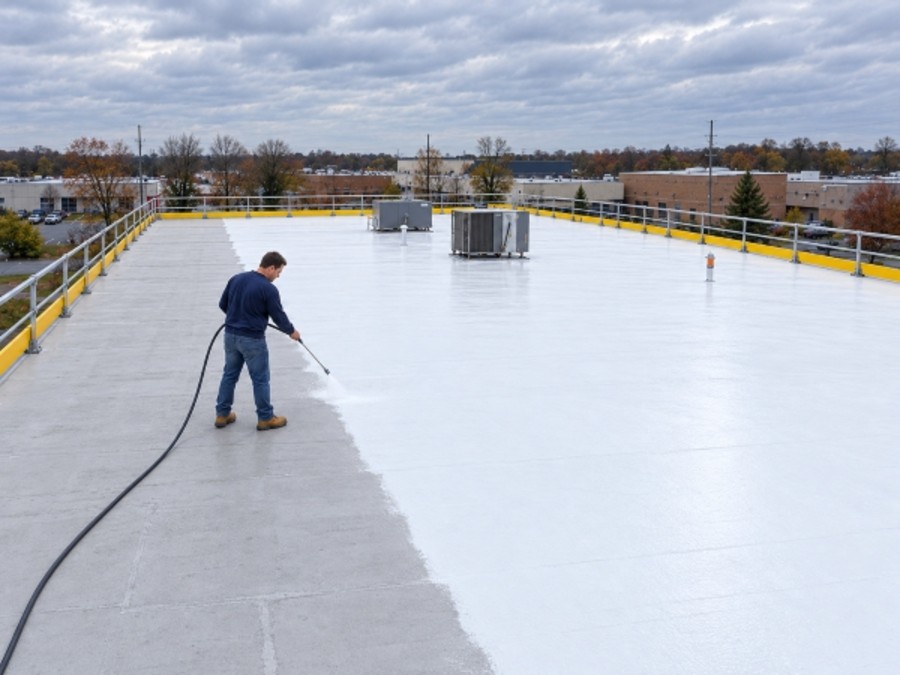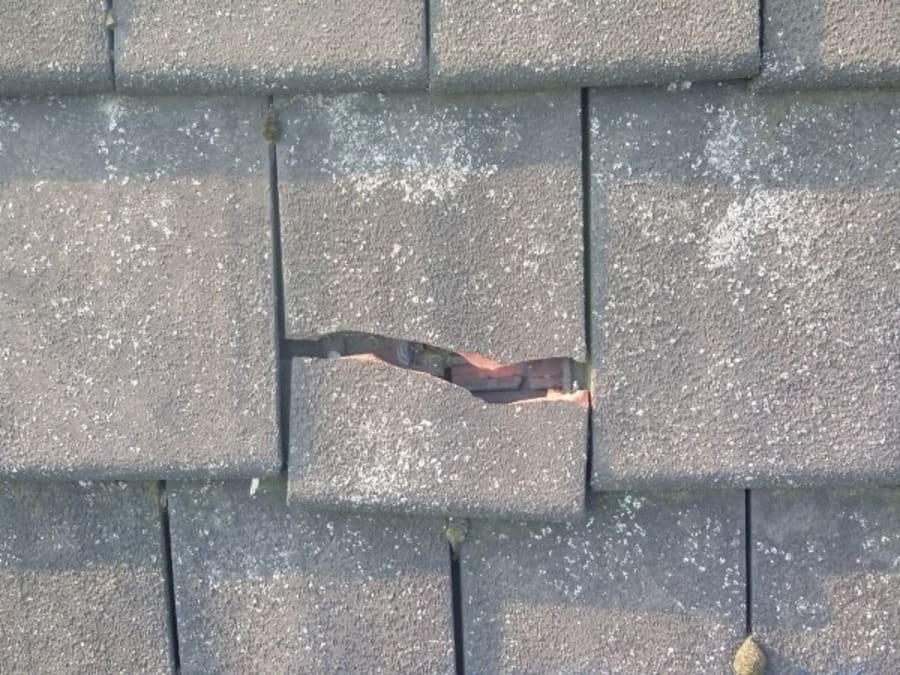
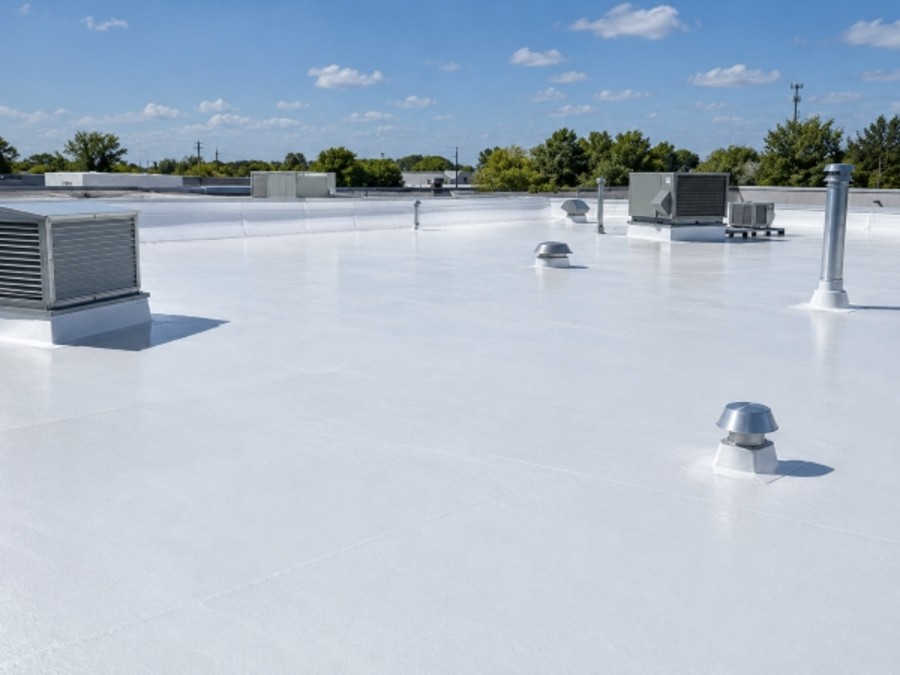
Flat roof sealing in Philadelphia, PA is usually a detail-focused repair scope. Seams, flashing, penetrations, drains, curbs, edges, and prior repairs can all become water-entry points on a commercial flat or low-slope roof. Oak Grove Roofing provides general commercial roofing, acrylic and silicone coating and restoration, and spray foam installation for properties in Philadelphia and the surrounding service area.
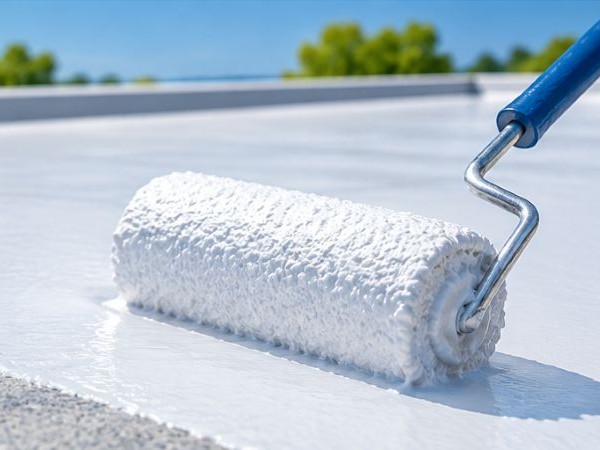
The first step is to identify where water is entering and whether the surrounding roof is still suitable for localized sealing. A roof with a few failed details may be repairable without treating the entire surface. A roof with widespread deterioration, wet insulation, unstable substrate, or recurring drainage problems may need a broader repair, coating, or restoration scope.
Where Flat Roof Sealing Is Usually Focused
Flat-roof leaks do not all begin in the same place, so sealing should follow the observed defect rather than assume one common cause. Areas that often deserve close inspection include:
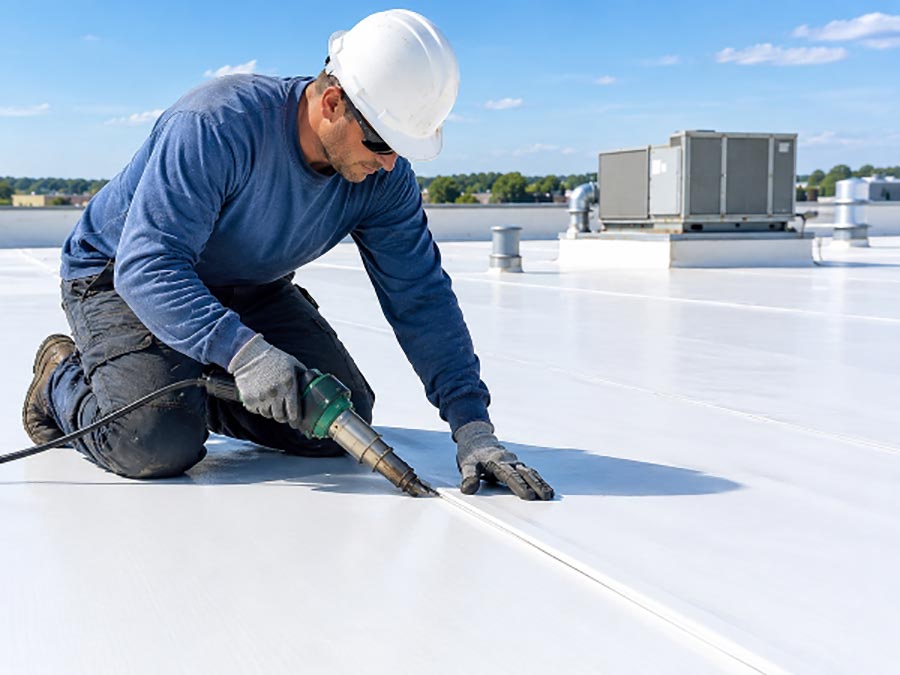
- Seams and laps: membrane joints can separate, lift, or deteriorate as materials move and age.
- Wall and parapet flashing: transitions where the roof meets vertical surfaces can fail at terminations, corners, or sealant joints.
- Penetrations and curbs: pipes, vents, conduit, drains, hatches, and rooftop equipment interrupt the roof surface and require compatible flashing details.
- Drains and scuppers: transitions around drainage openings need to remain secure and properly integrated with the roof membrane.
- Roof edges and prior repairs: old patches, loose metal, failed sealant, or damaged edge details may become leak paths.
A leak near one of these details does not prove the detail is the only source. Water can travel within a roof assembly before it appears inside the building, so diagnosis should come before sealing.
Sealing Materials Must Match the Roof
The repair material depends on the existing roof system, the defect, and the condition of the surrounding surface. A product that bonds well to one membrane or substrate may not be appropriate for another.
- Sealants and mastics: these may be used for compatible joints, fasteners, cracks, or small details when the product and substrate are suited to each other.
- Reinforced liquid flashing: some systems use liquid-applied materials with reinforcing fabric at seams, corners, and penetrations where additional reinforcement is appropriate.
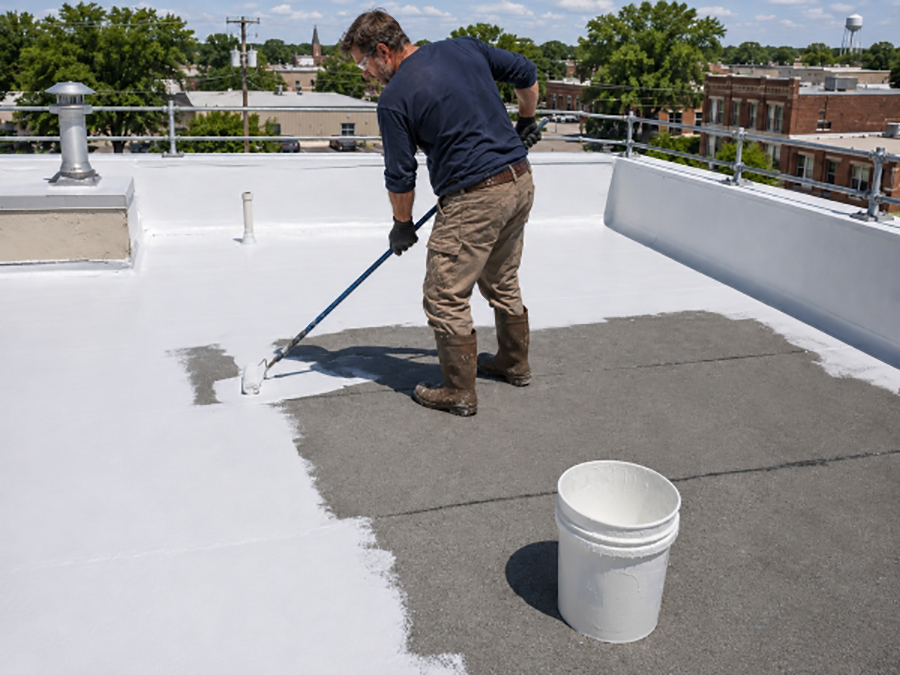
- Full-surface restoration: when deterioration extends beyond isolated details, a coating or spray-foam restoration system may be considered after repairs, moisture, adhesion, and drainage are evaluated.
Oak Grove Roofing’s fabric-reinforced roofing system page provides related context for reinforced restoration work over suitable existing roofs.
Preparation Determines Whether a Seal Can Bond
A repair should not be applied over dirt, loose material, incompatible old sealant, trapped moisture, or unstable roofing. Preparation may include cleaning, removing failed material, drying the repair area, rebuilding loose details, and confirming adhesion where the selected product requires it.
If moisture is suspected below the surface, the contractor should determine whether additional investigation is needed before sealing. A surface repair should not be used to cover known wet insulation or deteriorated substrate.
Ponding and Drainage Need Separate Evaluation
Recurring standing water can add stress to seams, flashing, and other details, but ponding is not automatically solved by applying more sealant. Blocked drains, low areas, settlement, slope, or outlet conditions may be contributing to the problem.
If water repeatedly remains near a repaired area, the proposal should explain whether drainage correction is part of the scope or whether a separate repair is needed. Sealing a detail can address a leak source while still leaving the underlying drainage condition unchanged.
Philadelphia Weather Can Expose Existing Weaknesses
Commercial roofs in Philadelphia can experience heat, humidity, cold weather, rain, and freeze-thaw cycles. Those conditions can expose existing weaknesses in seams, flashing, and prior repairs, but weather alone does not prove that a particular joint has failed.
The useful question is what the roof shows now. Open seams, loose flashing, cracked sealant, water staining, or recurring leak patterns provide a stronger basis for setting the repair scope than a general seasonal assumption.
When Spot Sealing Is the Right Scope
Localized sealing may fit when the defect is limited, the surrounding membrane or roof surface remains serviceable, and moisture has not spread beyond the repair area. In that situation, the goal is to correct the specific detail without turning a focused repair into a larger restoration project unnecessarily.
Oak Grove Roofing’s roof repair service page covers leak repair and other corrective work on flat and low-slope commercial roofs.
When a Broader Coating or Restoration Scope Makes More Sense
When leaks recur in multiple areas, the surface is broadly weathered, or many details are deteriorating at once, spot sealing alone may not be the most useful approach. A broader coating or restoration system may be considered when the roof is dry enough, stable enough, compatible, and otherwise suitable for restoration.
Oak Grove Roofing’s membrane roof coating page provides related information about full-surface coating work. A coating should still follow repairs, moisture evaluation, adhesion checks, and drainage review rather than replace them.
Inspection Timing Should Follow Roof Conditions
There is no single spring-and-fall inspection rule that applies to every commercial flat roof. The review schedule should reflect the roof system, age, repair history, drainage, rooftop traffic, debris, exposure, and any written maintenance requirements that apply.
An additional review may be appropriate after a specific severe-weather event, a new leak, visible damage, rooftop work by another trade, or a recurring drainage problem. The reason for the review should come from an observed condition or risk, not from a blanket calendar rule.
Sealing Work and Building Operations
Some sealing and coating work can be completed while the building remains occupied, but the impact on normal operations depends on roof access, odors, equipment locations, safety controls, noise, weather, and the project scope.
A proposal should explain expected access restrictions, any work areas that need to be protected, and whether rooftop equipment or tenant operations affect the schedule. It is better to define those conditions in advance than to assume the work will create no disruption.
Questions to Ask Before Approving Flat Roof Sealing
- Where is the leak source or suspected defect?
- What roof system is installed now?
- What sealing material or repair method is being proposed, and why is it compatible?
- How will failed old sealant or loose material be removed?
- Is there any evidence of wet insulation or unstable substrate?
- Are drainage or ponding conditions contributing to the problem?
- Does the repair remain localized, or is a broader coating or restoration scope more appropriate?
- What weather and surface conditions are required for the repair to cure?
- What building-access or operational limits should be expected during the work?
Flat Roof Sealing in Philadelphia, PA
Oak Grove Roofing serves commercial properties in Philadelphia and provides flat-roof repair, coating, restoration, and related commercial roofing services. A useful sealing scope starts with the actual leak source, the condition of the surrounding roof, moisture, drainage, preparation, and compatibility with the existing system.
Property owners can call Oak Grove Roofing at (717) 945-9939 to discuss a commercial flat-roof leak and whether localized sealing, repair, coating, or a broader restoration scope may fit the building.
Frequently Asked Questions
What is the difference between flat roof sealing and a roof coating?
Sealing usually targets specific defects such as seams, flashing, penetrations, or prior repairs. A coating is a broader restoration layer applied across a prepared roof surface.
Can sealing stop a flat roof leak?
It can when the leak source is correctly identified and the surrounding roof is suitable for localized repair. Wet insulation, unstable substrate, or widespread deterioration may require a broader scope.
How often should flat-roof seams and flashing be checked?
The schedule should reflect the roof system, condition, repair history, drainage, traffic, exposure, and any written maintenance requirements rather than one fixed interval.
Can sealing be done while the building stays in use?
Sometimes. The effect on operations depends on access, safety controls, odors, equipment, weather, and the repair scope, so those conditions should be discussed before work begins.