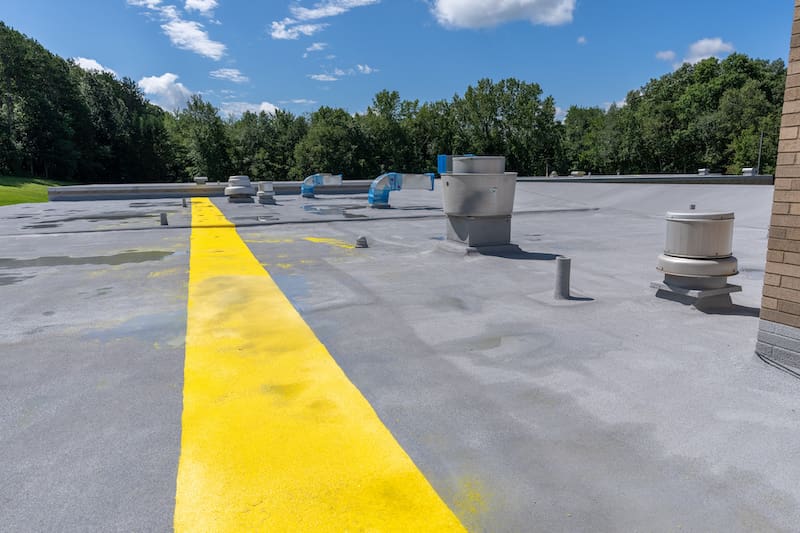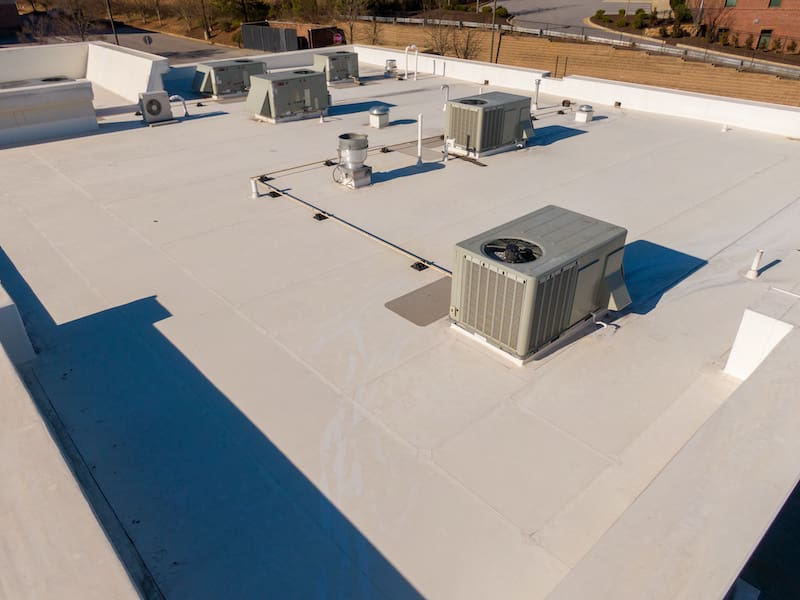
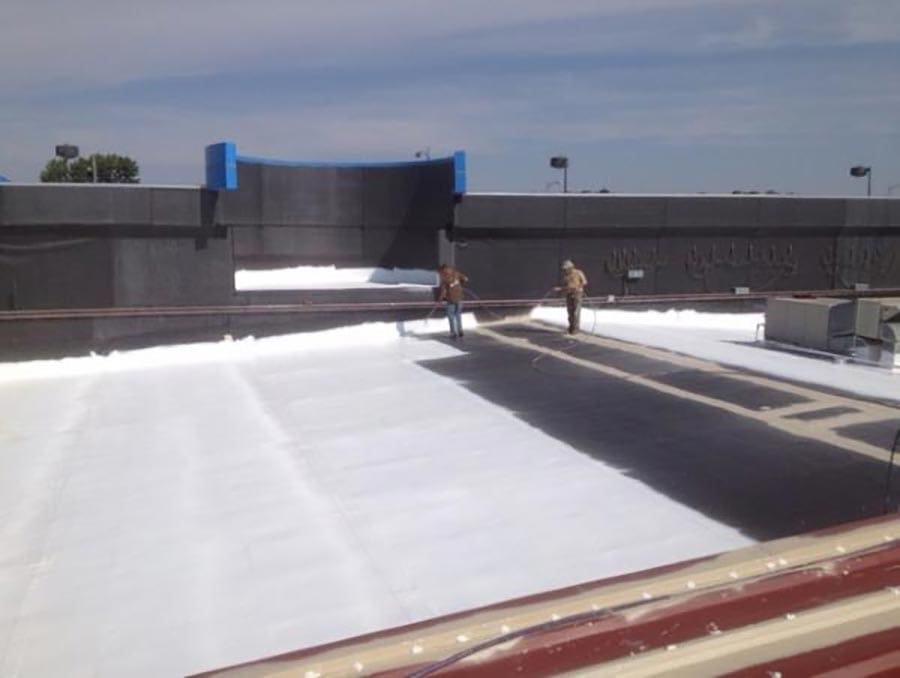
Lancaster commercial buildings face hot, humid summers that can make flat roofs absorb and hold heat for hours. Roof coating can help reduce heat gain by adding a reflective, fluid-applied layer over an eligible roof surface.
Call Oak Grove Roofing at (717) 945-9939 for roof coating in Lancaster, PA.
How Reflective Roof Coating Supports Energy Efficiency
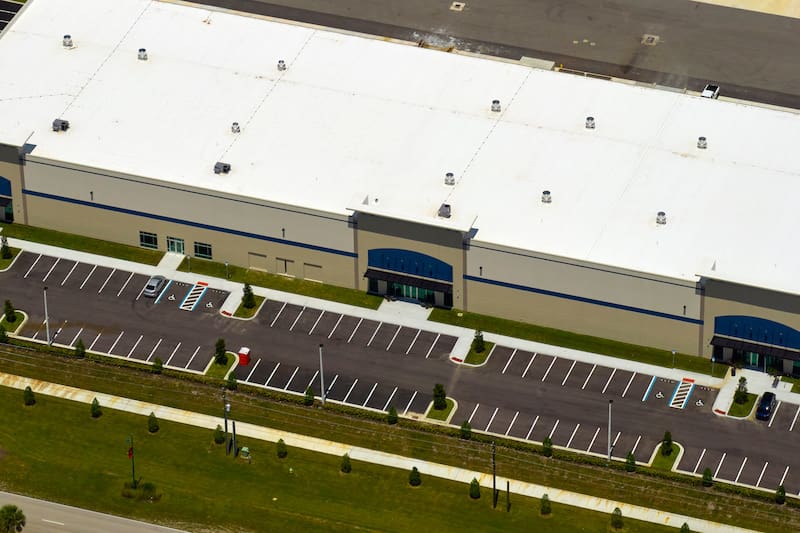
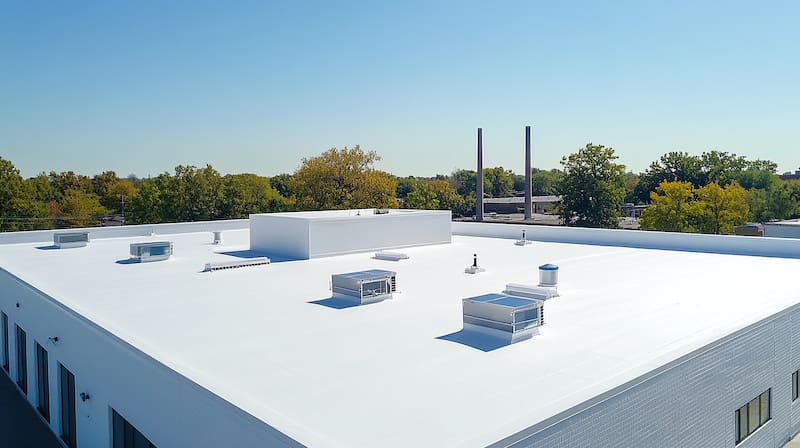
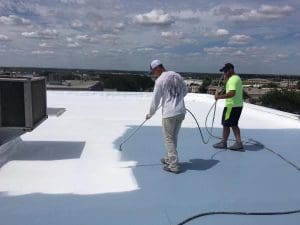 A reflective roof coating is designed to bounce more sunlight away from the roof instead of allowing it to soak into the building. On a hot Lancaster afternoon, that difference can matter for warehouses, retail centers, offices, and agricultural processing facilities with large roof areas.
The main energy benefit comes from lowering roof surface temperature. When the roof stays cooler, less heat transfers into the building below. That can reduce the cooling load, which is the work an air conditioning system must do to keep indoor areas comfortable or within operating requirements.
This can be especially relevant for buildings with older insulation, rooftop HVAC units, large open interiors, or heat-sensitive operations. A coating will not replace insulation or mechanical upgrades, but it can be part of a broader building performance plan.
Why Lancaster Summers Make Roof Heat Gain Expensive
Lancaster, PA often sees extended summer stretches above 85°F. During those periods, a dark or aging low-slope roof can become a major source of thermal gain, especially on large commercial properties where the roof covers thousands of square feet.
For distribution centers and agricultural processing facilities, cooling demand can already be high because of equipment, loading activity, refrigeration, or temperature-sensitive inventory. A roof that absorbs and radiates heat adds another operating cost. Reflective coatings help reduce the solar heat the building must fight.
Lower roof temperatures can also reduce thermal stress on the existing roof assembly. Repeated heating and cooling cycles can contribute to material movement, seam stress, and surface wear. A properly selected coating can help protect the roof surface while improving reflectivity.
Silicone and Acrylic Roof Coating Options
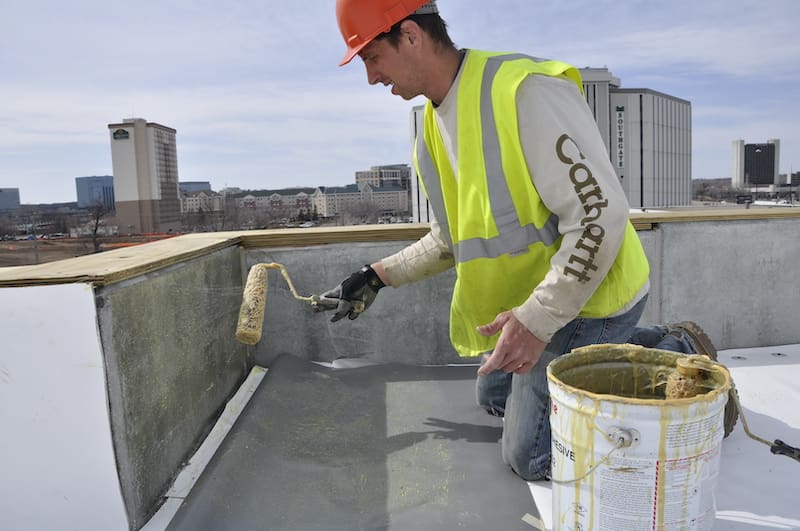
Silicone and acrylic coatings are two common choices for commercial roof restoration. Both are applied as liquid systems that cure into a seamless protective membrane, but they perform differently depending on roof condition, drainage, budget, and long-term goals.
Acrylic coatings are often valued for strong reflectivity and cost-effective performance on roofs with positive drainage. Positive drainage means water moves off the roof instead of remaining in low areas. Acrylic can be a good fit when the roof is sound, the surface is prepared correctly, and ponding water is not a major issue.
Silicone coatings are often considered when moisture resistance is a priority. They can perform well where water may sit longer than ideal, provided the roof is structurally sound and properly detailed before installation. Silicone also offers strong reflectivity, which makes it relevant for energy-focused coating projects.
Before either system is considered, the roof should be inspected for trapped moisture, active leaks, damaged flashing, open seams, drainage problems, and needed repairs. EPDM, TPO, modified bitumen, built-up roofing, and spray foam roofs can often be coated under the right conditions.
Plan Roof Coating as a Long-Term Performance Upgrade
A reflective coating can support lower cooling demand, better roof surface protection, and a planned maintenance path for Lancaster commercial buildings. At the end of the warranty period, many coating systems can be cleaned, inspected, and recoated to renew coverage and extend roof life without full replacement.
Lancaster Roof Coating Specialists
For roof coating in Lancaster, PA contact Oak Grove Roofing at (717) 945-9939 today.
FAQ
How much can a reflective roof coating reduce cooling costs on a Lancaster commercial building?
The exact savings depend on roof size, insulation, building use, HVAC efficiency, and energy rates. The clearest benefit is that reflective coatings can lower roof surface temperatures compared to an uncoated or dark roof, which can reduce cooling load during hot summer weather.
What types of roofs can be coated, and does the roof need to be in good condition?
EPDM, TPO, modified bitumen, built-up roofing, and spray foam roofs can often receive coatings when the surface is compatible and properly prepared. The existing roof should be structurally sound, dry, and free of active leaks before coating begins.
How long does a roof coating last, and can it be reapplied?
Many commercial coating systems are installed with warranty periods based on coating thickness, roof preparation, and project specifications. When the warranty term ends, the roof can often be inspected, cleaned, and recoated to renew protection and extend service life.