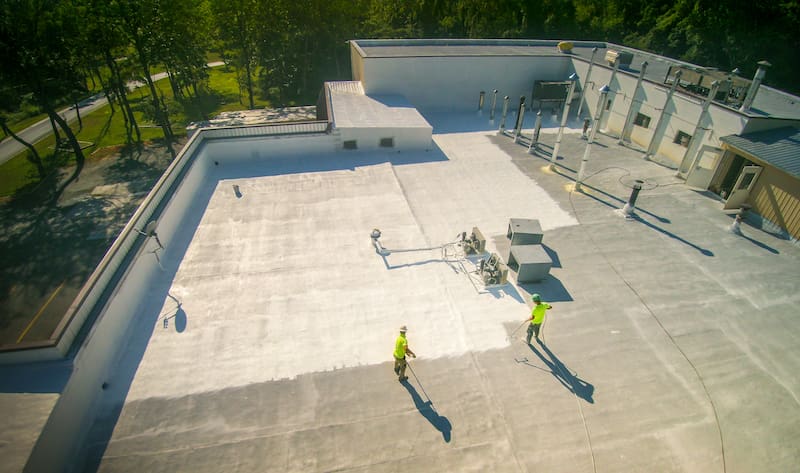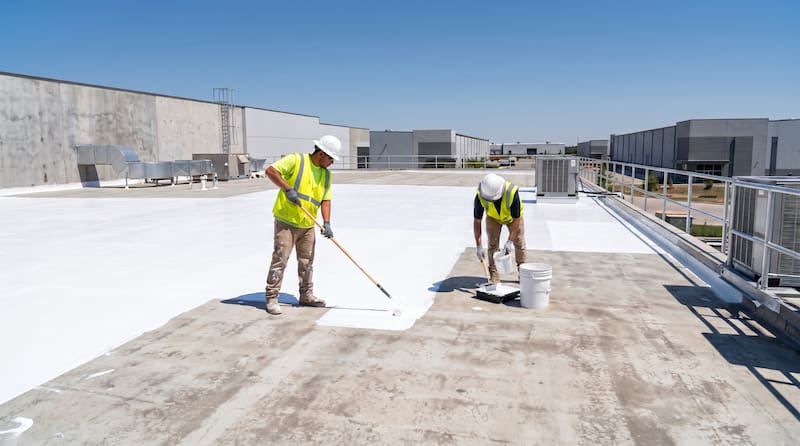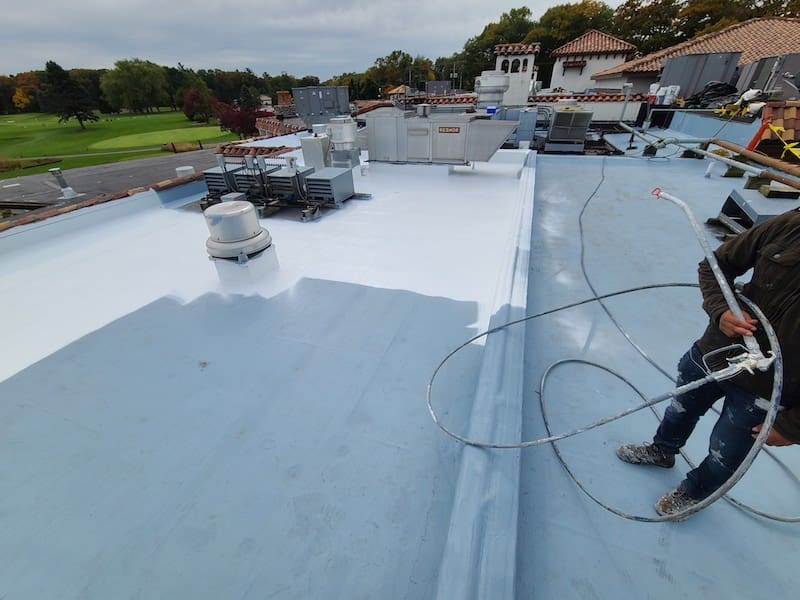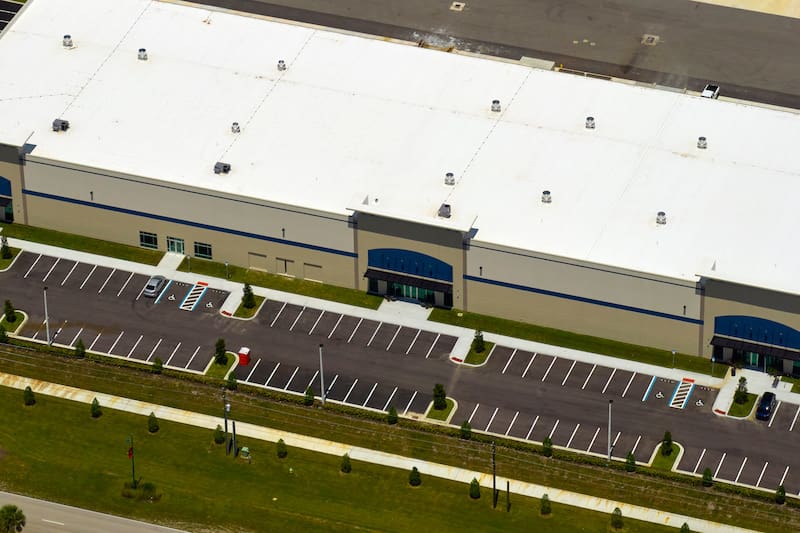
York, PA, is home to large commercial buildings such as warehouses, manufacturing facilities, distribution centers, and retail properties that expose expansive flat roofs to substantial rainfall and winter freeze-thaw cycles. For aging roofs that remain structurally sound but have developed surface-level vulnerabilities, a coating can provide an additional waterproofing layer without requiring a full tear-off. Roof coating can seal minor cracks, cover aging lap seams, and create a continuous barrier across an existing commercial roof.
Call Oak Grove Roofing at (717) 945-9939 for roof coating in York, PA.
How Roof Coating Creates a Waterproof Barrier
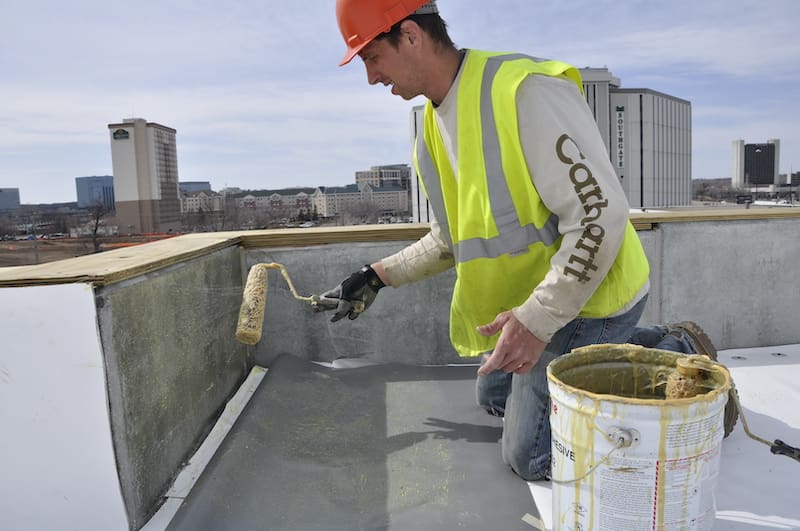
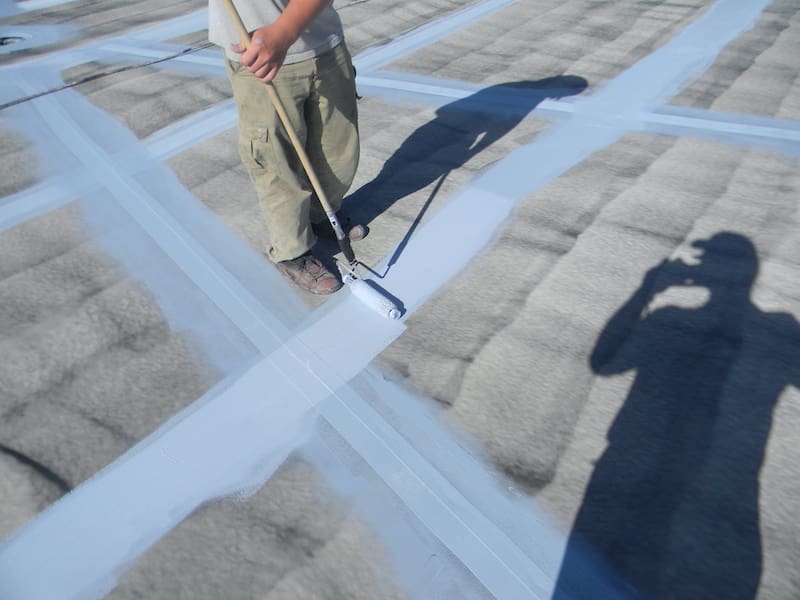
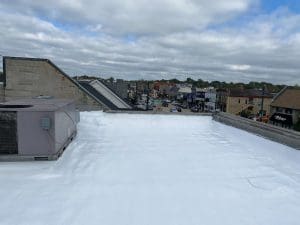 A roof coating is applied as a fluid directly over a prepared roofing surface. As it spreads, the material flows into small surface irregularities, hairline cracks, and areas around lap seams. Once it cures, it forms a continuous flexible membrane across the roof.
This continuous surface helps close the micro-gaps where water can begin entering an aging roofing system. Rather than leaving individual cracks and seams exposed to repeated rainfall, the cured coating creates another layer between the existing membrane and the weather.
Ponding water presents a particular challenge on flat roofs. Areas with limited drainage slope can retain water after heavy rainfall, increasing prolonged exposure to moisture. The ability of a coating to handle this condition depends on the coating system selected and the existing roof’s drainage characteristics.
What Roof Coating Waterproofs on an Aging Membrane
Commercial roofing membranes can develop vulnerabilities after years of exposure. UV weathering can contribute to surface porosity, while repeated temperature changes can contribute to minor cracking. Lap seams, which are the joined areas between membrane sections, can also become fatigued over time.
A coating can address these surface-level weaknesses by covering the existing membrane with a continuous layer. It can bridge minor cracks and cover lap seams, helping reduce the small openings through which moisture may otherwise reach the underlying roofing assembly.
The condition of the existing roof remains important. Coating is appropriate when the underlying system is structurally sound and suitable for restoration. Significant structural deterioration or extensive damage may require a different roofing solution, so evaluating the existing system is an important part of determining whether coating is appropriate.
Choosing a Coating for York’s Water Exposure
Different coating types respond differently to the conditions found on commercial flat roofs. Silicone coatings are specifically designed to resist ponding water. Silicone does not absorb water and can maintain flexibility during prolonged wet exposure and changing temperatures, making it well suited to large flat roofs where standing water can occur.
Acrylic coatings are water-based and provide high reflectivity and UV protection. They are generally better suited to roofs with adequate drainage, where water does not remain standing for prolonged periods. Their reflective properties can also be useful on large commercial roofs exposed to strong summer sunlight.
The right coating should be selected according to the roof’s existing condition, drainage characteristics, and exposure to moisture and UV radiation. A coating system that matches those conditions can provide a more appropriate waterproofing barrier than choosing a material based only on its surface appearance.
Maintaining the Waterproofing Layer
A roof coating remains part of the building’s waterproofing system after installation and should be inspected as the roof continues to age.
Recoating provides a long-term maintenance pathway. When a coating reaches the end of its warranty period, it can be recoated to renew the waterproofing barrier rather than automatically removing the existing system. This approach can extend the useful life of the coating system while avoiding the tear-off and disposal associated with full roof replacement.
Protect Your Commercial Roof With Coating
For structurally sound commercial roofs, coating can serve a meaningful waterproofing function. By flowing into minor surface imperfections, covering fatigued seams, and curing into a continuous membrane, it can help protect an aging roof from ongoing moisture exposure.
Understanding the roof’s condition and water exposure is the first step in determining whether coating is an appropriate solution. For roof coating in York, PA, contact Oak Grove Roofing at (717) 945-9939 today.
FAQ
How does roof coating waterproof an aging commercial roof in York, PA?
The coating is applied as a fluid that bridges minor surface cracks and irregularities while covering lap seams. It then cures into a continuous flexible membrane that helps seal small gaps and porous areas where water can enter the aging roof surface.
What type of roof coating handles ponding water best on large flat roofs?
Silicone coatings are specifically engineered for resistance to ponding water. They do not absorb water and can withstand prolonged wet exposure, making them a suitable option for flat commercial roofs where standing water occurs.
What happens when a roof coating reaches the end of its warranty period?
The existing coating can often be recoated rather than removed. Applying a new coating layer can renew the waterproofing barrier and extend the coating system’s service life without a full tear-off.